



















































Understanding Standard Dining Table Height, Width and Dimensions: A Room-by-Room Buying Guide
@freedomtreehome


TBuying a dining table looks simple until you are standing in a showroom with a measuring tape in one hand and a floor plan in the other. Suddenly, the questions pile up. Will six people actually fit? Will your chairs slide in without banging the wall? And why dosquare scatters to bolsters and lumbar shapes, there's a cushion for every corn es one table feel just right while another leaves everyone hunched or cramped?
Most of that comfort comes down to numbers. Get the dining table height, width and length right, and meals feel relaxed. Get them wrong, and even a beautiful table becomes a daily nuisance.
I have helped plenty of homeowners pick tables over the years, and the same confusion shows up again and again. So let us walk through the standard dining table dimensions properly, using real measurements you can trust and simple rules you can apply to your own home.
AWhy Do Dining Table Dimensions Matter More Than You Think?
TA dining table is one of the few pieces of furniture your family uses every single day. It has to seat people, hold food, and still let everyone move around comfortably.
When the dining table size is off, you feel it instantly. Chairs knock into the sideboard. Serving bowls have nowhere to sit. Someone at the corner keeps getting elbowed. According to design guidance from Architectural Digest India, spatial planning around the dining area is one of the most common things people underestimate when furnishing a home.
Good dining table measurements do three quiet jobs at once. They give each diner enough personal space, they leave room to walk behind seated guests, and they keep the proportions of the table in balance with the room. Nail those, and the table almost disappears into daily life in the best way.


AWhat Are the Standard Dining Table Dimensions?
TLet us start with the baseline. Across most furniture makers, a rectangular table lands within a fairly narrow band. This is the reference point everything else builds on.
| Measurement | Standard Range | In Centimetres |
|---|---|---|
| Height | 28 to 30 inches | The foundation everything else builds on |
| Width | 36 to 40 inches | Adds depth and back support |
| Length (4 seater) | 47 to 60 inches | Breaks up sharp corners, softens the look |
| Space per seat | 24 inches minimum | Structural closure and leaning support |
TThese standard dining table dimensions are not arbitrary. They come from decades of furniture practice and human ergonomics. Industry references such as Woodworking Network note that manufacturers stick to these ranges because they suit average adult proportions and standard chair heights.
AWhat Is the Standard Dining Table Height?
THere is the number worth memorising: the standard dining table height sits between 28 and 30 inches (71 to 76 cm), with 30 inches being the most common.
TWhy this range? It works with a typical dining chair seat height of 18 inches. That gap of roughly 10 to 12 inches between the seat and the tabletop is what lets you cross your legs, sit upright and eat without your knees hitting wood. The Spruce recommends checking exactly this clearance before you buy, and it is advice I echo constantly.
TIf anyone in your home is much taller or shorter than average, test the table in person. A fixed dining table height suits most people, but comfort is personal.
AHow Wide Should a Dining Table Be?
TThe dining table width usually falls between 36 and 40 inches (91 to 102 cm). This is the sweet spot.
Anything narrower than 36 inches, and you lose the middle strip where sharing dishes lives. That central space matters a lot in Indian homes, where meals often mean several bowls, a serving platter and maybe a hot casserole all on the table at once. Go wider than 44 inches and reaching across for the salt starts to feel like a stretch. A dining table width in that 36 to 40 inch band keeps everything within comfortable arm's reach.
AHow Does Seating Capacity Change Dining Table Size?
TThis is where the dining table length does most of the heavy lifting. Height and width stay fairly fixed, while the dining table length grows with the number of people you want to seat. The rule designers lean on is simple: allow at least 24 inches (60 cm) of table edge per person.
Here is a practical dining table size chart for rectangular tables:
| Seats | Length | Width | Best For |
|---|---|---|---|
| 4 seater | 120 to 150 cm (47 to 60 in) | 75 to 90 cm | Couples, small families, apartments |
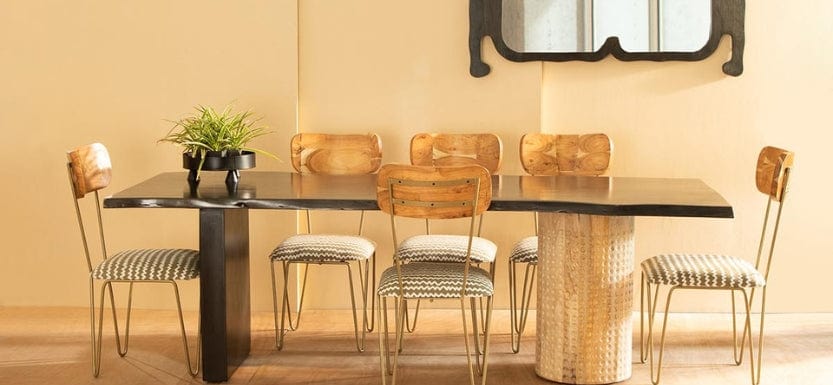
| 6 seater | 150 to 180 cm (60 to 72 in) | 90 to 100 cm | Most family homes |
| 8 seater | 180 to 240 cm (72 to 96 in) | 100 to 110 cm | Larger families, frequent hosts |
| 10 seater | 240 to 300 cm (96 to 118 in) | 110 to 120 cm | Big gatherings, open dining rooms |
TNotice how the dining table width creeps up slightly as the dining table length increases. A longer table looks and feels better with a touch more presence across the middle, which also gives you more room for serving.
ARectangular or Round: Which Shape Suits Your Room?

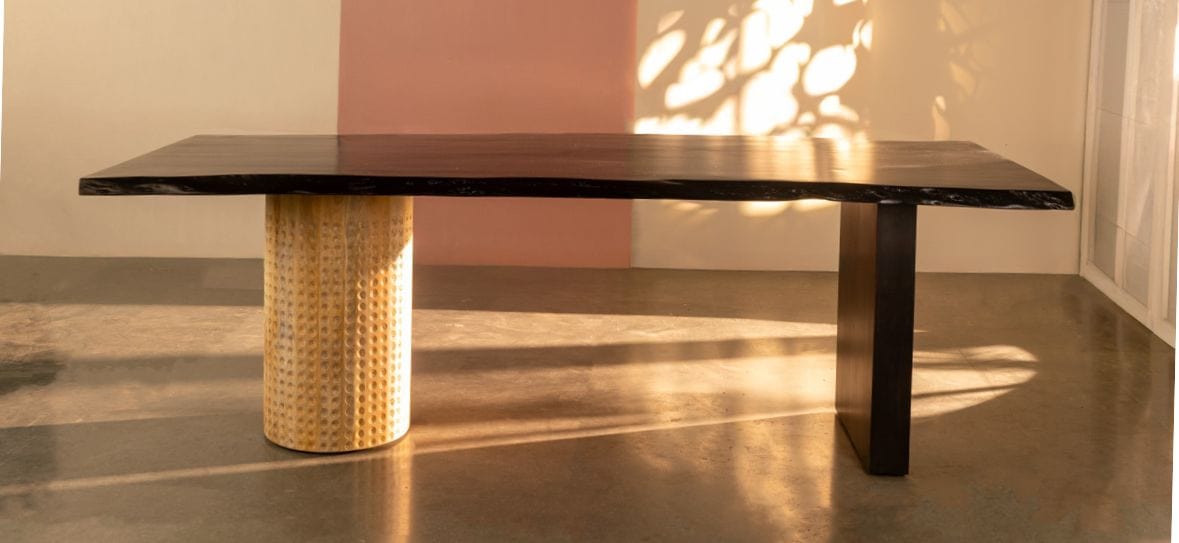
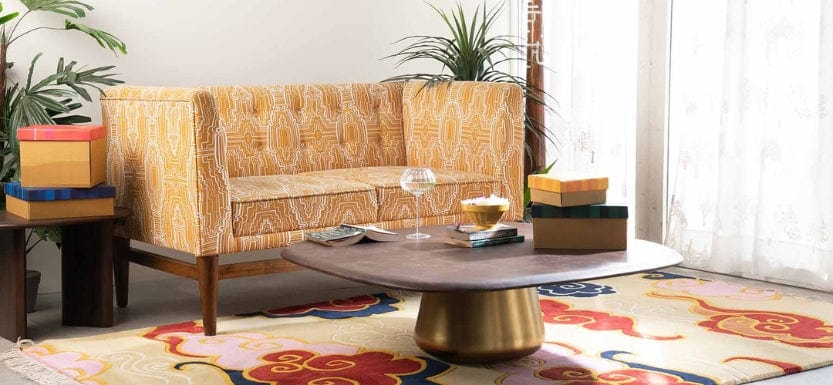
Behind the scene set up.

The landscape which is the color inspiration.
TShape changes the maths, so it is worth a quick comparison.
| Feature | Rectangular | Round |
|---|---|---|
| Best room type | Long or narrow rooms | Square or compact rooms |
| Conversation flow | Good along the length | Excellent, everyone faces in |
| Seating 4 people | 120 cm length | 90 to 110 cm diameter |
| Seating 6 people | 180 cm length | 120 to 135 cm diameter |
| Corners | Can pinch walkways | Soft, safer with kids |
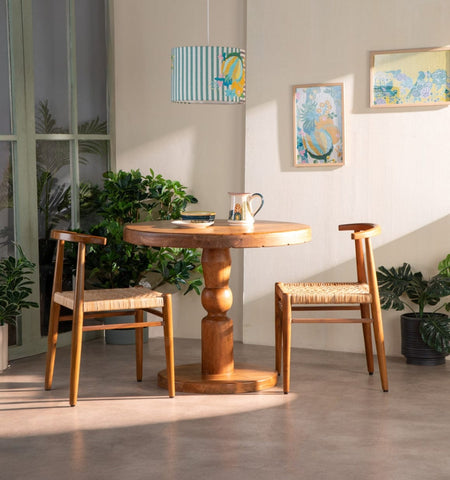
TRound tables are lovely for smaller flats because they have no sharp corners eating into your walking space, and everyone can see one another. As a rough guide, a 90 cm round seats four, while you need around 120 cm or more to seat six. Rectangular tables use floor space more efficiently in longer rooms and scale up easily when guests arrive.
AHow Do You Measure Your Room for the Right Dining Table Length?
TA common mistake is choosing the table first and worrying about the room later. Flip that order. Accurate dining table measurements always start with an honest look at the space you have.
Grab a tape and note the length and width of your dining zone. Then work backwards using the clearance rule. ArchDaily's ergonomic design references suggest leaving at least 90 to 100 cm (about 36 inches) between the table edge and the nearest wall or furniture. That gap is what lets a person pull out a chair, sit, and let someone else squeeze past behind them.
Here is the quick method:
1. Measure your room's usable length and width in centimetres.
2. Subtract about 90 cm from each side for chairs and walking space.
3. What remains is the maximum dining table size your room can take comfortably.
So a room measuring 300 cm by 360 cm gives you roughly 120 cm by 180 cm to play with, which means a dining table length of about 180 cm, a comfortable six seater, will fit nicely. Doing this before you shop saves you from falling for a gorgeous table that simply will not breathe in your space.
AWhich Dining Table Height Works for Your Lifestyle?
TStandard is not the only option. Three height families exist, and each suits a different setting.
1. Standard height (28 to 30 in / 71 to 76 cm): The everyday choice, pairs with regular dining chairs, right for almost every home.
2. Counter height (34 to 36 in / 86 to 91 cm): Casual and social, works beautifully in open kitchens and needs counter stools.
3. Bar height (40 to 42 in / 101 to 107 cm): Tall and informal, great for a small perch or a breakfast bar, less so for long sit-down meals.
For a proper family dining table where you linger over food, the classic dining table height is almost always the comfortable pick. Save the taller options for corners meant for quick coffees and casual chats.
AHow to Choose the Right Dining Table for Different Room Sizes
TMatching the table to your room is really about honest proportions.
Small flats and studios: A round or square four seater keeps the space open. Look at extendable designs if you occasionally host. Freedom Tree's dining collection has compact pieces that suit city apartments without feeling like a squeeze.
Mid-sized family homes: A six seater rectangular table is the workhorse. It handles daily meals and the occasional guest with equal ease.
Large or open-plan homes: An eight or ten seater anchors the room and gives you generous dining table measurements for entertaining. Just keep that 90 cm walkway on every side so the room still flows.
One more thing worth a thought: the material and how it is sourced. If you care about longevity and the planet, look for solid wood tables carrying Forest Stewardship Council (FSC) certification, which confirms the timber comes from responsibly managed forests. A well-built table is a decade-long companion, so the wood underneath the finish genuinely matters.
AQuick Tips Before You Buy
- Always test the dining table height with the actual chairs you plan to use.
- Keep a minimum 24 inches of table edge per diner.
- Leave 90 to 100 cm of clearance around the table for movement.
- Round tables win in tight, square rooms. Rectangular tables win in long ones.
- Note down your dining table measurements on paper before you fall in love with a table, not after.
- Pair the table with chairs of the correct seat height for a comfortable fit.
AA Table That Truly Fits Your Home
AThe right dining table is not the biggest or the most expensive one. It is the one whose dimensions match your room, your family and the way you actually eat. Once you know the standard dining table height, the sensible width, and how length scales with seating, choosing becomes far less daunting.
Take your measurements, apply the clearance rules, and picture real life happening around the table. When the numbers line up, everything else, from Sunday lunches to long chats over chai, simply falls into place. If you would like a starting point, browse Freedom Tree's dining tables and dining chairs to find pieces built in these tried and tested proportions.


AFrequently Asked Questions
A1. What is the size of a 6 seater dining table?
A standard 6 seater rectangular dining table is around 150 to 180 cm long (60 to 72 inches) and 90 to 100 cm wide (36 to 40 inches), with a height of about 75 cm. That gives each of the six diners roughly 60 cm of personal space to eat comfortably.
2. What are the dimensions of a standard dining table?
A standard dining table is typically 28 to 30 inches (71 to 76 cm) high and 36 to 40 inches (91 to 102 cm) wide. Length depends on seating, but a common four seater runs about 120 to 150 cm long.
3. What is the size of a 10 seater dining table?
A 10 seater dining table usually measures 240 to 300 cm in length (96 to 118 inches) and 110 to 120 cm in width. It suits large, open dining rooms and homes that host big gatherings often.
4. What is the standard height of a dining table?
The standard height of a dining table is 28 to 30 inches (71 to 76 cm), with 30 inches being the most common. This pairs with a chair seat height of around 18 inches for comfortable legroom.
5. What is the length of a 4 seater dining table?
A 4 seater dining table is generally 120 to 150 cm long (47 to 60 inches). A square four seater can be as compact as 90 by 90 cm, making it a good fit for smaller apartments.
AReferences & Citations
ArchDaily Dining Rooms: Their Importance and Possibilities in Plans
Forest Stewardship Council Furniture


